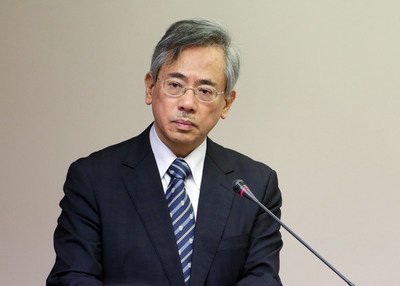
An academic scandal that forced the education minister to resign has snowballed, with more scholars suspected of foul play.
Education Minister Chiang Wei-ling resigned on Monday after he was implicated in a peer review scandal. Chiang was said to be linked to a scholar who allegedly faked peer reviews of his papers. Chiang appeared as a co-writer in some of the 60 papers withdrawn by an academic journal.
Meanwhile, the technology ministry said on Wednesday that after further investigation, the ministry found that Chiang did not participate in the peer review fraud. The ministry said that an e-mail from the academic journal, the Journal of Vibration and Control (JVC), has as also indicated Chiang was not involved in the fraud.
Following Chiang’s resignation, Health Minister Chiu Wen-ta was said to have an unreasonably high output of papers in recent years. On Tuesday opposition Democratic Progressive Party lawmaker Kuan Bi-ling said data show that Chiu’s name appeared on 152 papers in 2005. She said that’s an average of one paper for every two days. Kuan called on Premier Jiang Yi-huah to look into the matter to see whether foul play was involved.
On Wednesday health ministry spokesman Wang Jet-chau explained that the figure was not inflated.
"There are 31 original papers, 3 of which list [the health minister] as its primary author" said Wang. "The legislator probably included conference papers in the figure, but according to academic conventions, conference papers co-written with students are generally not listed as academic papers," he said.
Wang also said that the few years around 2005 were the peak of Chiu’s research career. He also said that Chiu was personally involved in the work leading up to all 152 papers, and that he is not just a nominal author.