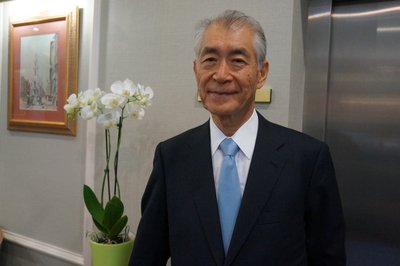
Two immunologists, an American and a Japanese, have been named joint recipients of the first Tang Prize in Biopharmaceutical Science, hailed as Asia’s Nobel Prize.
On Thursday the Tang Prize Foundation announced that James P. Allison of the United States and Tasuku Honjo of Japan took the inaugural prize in the category of biopharmaceutical science for their contributions to cancer therapy.
Honjo discovered PD-1, an inhibitor of T-cells, in 1992. Antibodies against PD-1 have been approved by the US Food and Drug Administration as an investigational drug and developed for the treatment of cancer.
Allison is the first scientist to identify CTLA-4, an inhibitory receptor on T-cells, in 1995. Allison’s team developed an antibody that blocks CTLA-4 activity and showed in 1996 that this antibody is able to help fight several types of tumors in mice.
The two scientists will share a cash prize of NT$40 million (US$1.33 million) and will each receive a medal and certificate.
The biennial Tang Prize was founded in 2012 by Taiwanese entrepreneur Samuel Yin to honor leaders in four fields: sustainable development, biopharmaceutical science, sinology, and rule of law.
Former Prime Minister of Norway Gro Harlem Brundtland was named winner of the first Tang Prize in Sustainable Development on Wednesday. Winners of two other categories are scheduled to be announced later this week.
An award ceremony for the winners in all four categories will take place Sept. 18 in Taipei.