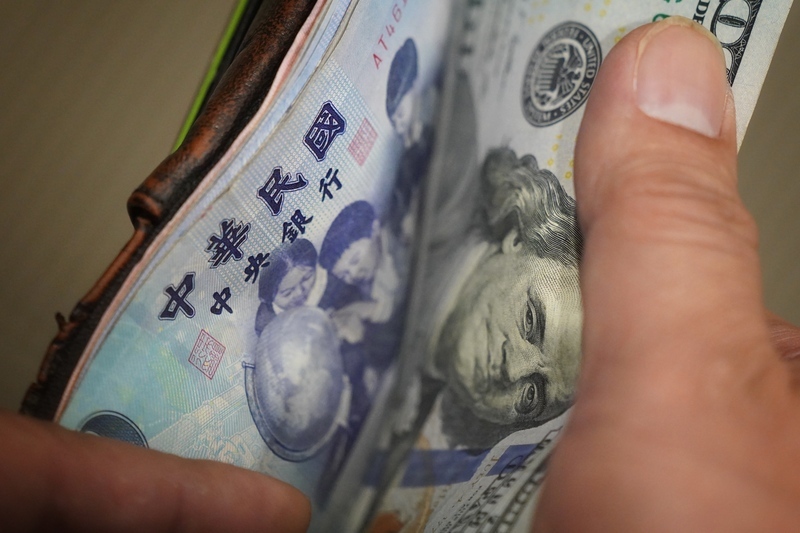
The Central Bank of Taiwan issued a statement over the weekend, emphasizing that the U.S. dollar's status as the most important international reserve currency is safe. This is likely in response to the recent unprecedented growth of the New Taiwan dollar, caused partially by domestic businesses’ mass sell-off of U.S. dollar assets.
National Chengchi University Finance adjunct professor Yin Nai-ping (殷乃平) said in a Monday interview that the statement was a message of confidence, hoping to stabilize the confidence of domestic investors. He points out that, unfortunately, the trend of de-dollarization of financial assets in the international market may mean this confidence call has a very limited effect. Yin said that the current trend of de-dollarization of financial assets in the international market is evident, especially after Trump’s tariff policy repeatedly caused turmoil in the financial market. Yin mentions rumors that Trump is also going to push for tax cuts, which raises concerns about the growing size of the U.S. public debt, a staggering US$36 trillion.
However, National Central University Economics Professor Chiou Jiunn-rong (邱俊榮) analyzed that the turmoil caused by Trump's new policy is a temporary phenomenon. He said that although the U.S. debt problem is serious, based on past examples of the United States dealing with debt, U.S. finances will not collapse.
Chiou said that many countries, including Taiwan, enjoy a trade surplus with the United States. Because the market has a certain expectation of Trump's approach to countries with trade deficits, he underscores that this will continue to create currency appreciation challenges. If the public’s expectations do not change, the rise of the New Taiwan dollar may be difficult to suppress.