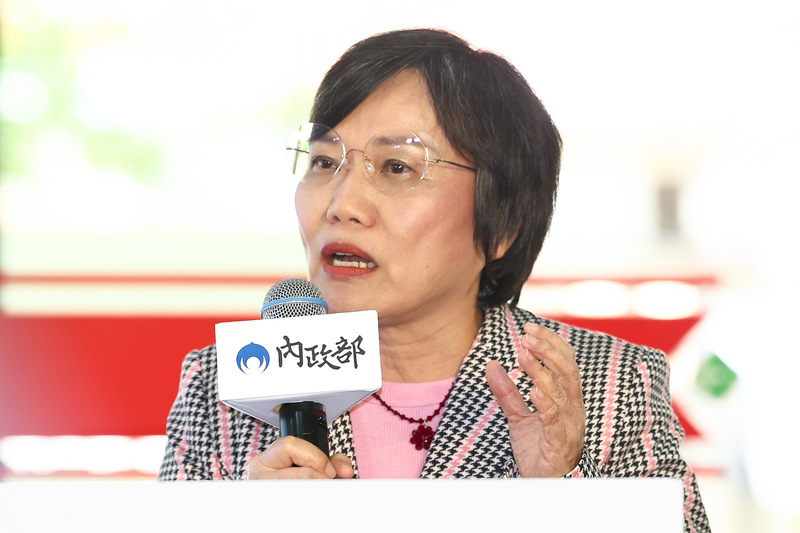
The Interior Ministry is promoting the renaming of local roads which commemorate authoritarian figures as part of the government’s National Action Program for Transitional Justice Education. The renaming, which would largely affect roads such as the many “Zhongzheng” roads named after Chiang Kai-shek’s (蔣介石) adopted name and “Jingguo” roads named after Chiang Ching-kuo (蔣經國), is being met with some criticism from opposition parties due to the cost and anticipated inconvenience.
This Monday Interior Minister Liu Shyh-fang (劉世芳) said changes will take place in accordance with the law, and that scholars and experts have been commissioned to conduct relevant research. Should issues arise regarding renaming roads and removing statues, Liu says the central government will reach a consensus with local government entities and residents before moving forward.
The subsidy for removing statues and renaming roads is capped at NT$100,000 (about US$3,300) per case, explains Liu, who added that more than 100 cases have already been subsidized.
Liu emphasizes that transitional justice is a human rights issue and must be taken seriously. She maintains that the government cannot only promote transitional justice when there is the budget to do so, as such an attitude is not in-line with democracy and the rule of law.
The National Action Program for Transitional Justice Education is to be implemented over a four-year period from 2023 to 2026. The program prioritizes education, civil servant training, professional training, and communication with the general public to remove symbols of authoritarianism.