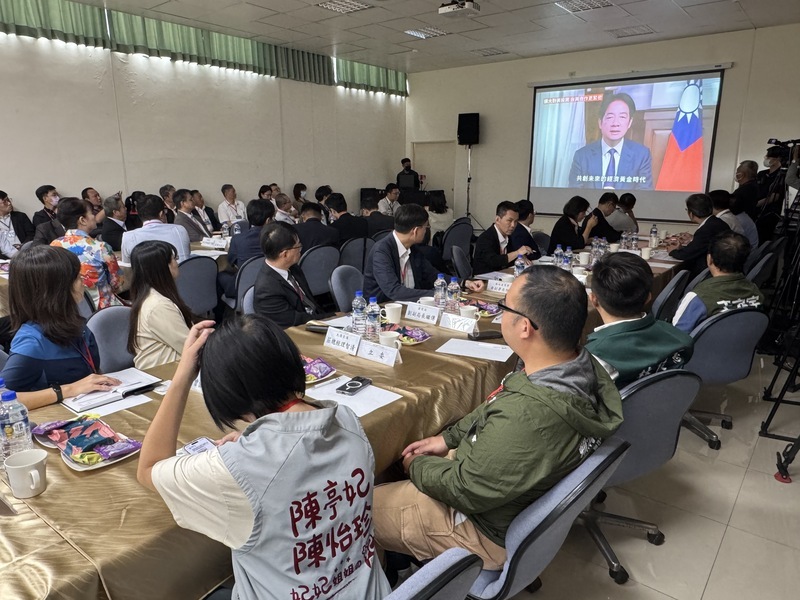
President Lai Ching-te (賴清德) announced a plan on Friday to keep electricity prices down by subsidizing Taipower. He also explained strategies for negotiations with the United States, stressing that agriculture, fisheries, and small- and medium-sized enterprises would not be sacrificed.
Speaking during his industrial listening tours, Lai unveiled the five major strategies the government hopes to employ in negotiations with the United States. They include: “zero tariffs”, expanding U.S. purchases and U.S. investments, eliminating non-tariff trade barriers, and finally resolving export controls and high-tech product “origin washing” issues. He stated that he believes Taiwan has the economic power to help re-industrialize the United States, even assisting it to become the global AI center. However, he also emphasized that the government is looking to secure national interests and space for the sustainable development of Taiwan’s industries, including agriculture, fisheries, as well as small and medium enterprises.
Touching on the much anticipated NT$88 billion (US$2.67 billion) supply chain support program, he noted that the Cabinet has decided to raise the proposed amount to NT$93 billion (US$2.86 billion). This comes from the special resolution budget bill of NT$410 billion (US$12.6 billion) passed Thursday, which includes an NT$100 billion (just under US$3.1 billion) Taipower subsidy.
Lai mentioned how, especially when facing down tariffs, most businesses look to cut production costs. He said that the Taipower subsidy, following the example of power subsidies during the COVID-19 pandemic, is the government’s bid to assist in stabilizing prices.
Regarding the opposition party’s advocacy for universal cash payments, the president stressed that money should be spent as judiciously as possible. With the subsidy plan, Taipower– a key player that everyone in Taiwan relies on– will be able to continue to operate without passing stress to other industries despite these difficult times.