South Korean President Yoon Suk Yeol attempted to declare martial law in his country late Tuesday night, supposedly to “root out pro-North Korean forces”. The declaration was vetoed by a parliamentary vote just a few hours later, but the surprise and confusion of the move left many wondering what international aftereffects there could be.
DPP Legislator Michelle Yin (林楚茵) held the foundational meeting for a Taiwan-Korea economic, cultural, and trade promotional association on Friday, where South Korean Representative Lee Eun-ho responded to the political upheaval in South Korea. Lee said that it should be viewed as an internal issue, and would not affect the nation’s relationships with other countries.
Lee’s sentiments were echoed by Deputy Foreign Minister Tien Chung-kwang (田中光) who stated that Taiwan and South Korea have a strong partnership on many fronts, including economy, culture, and tourism. Tien said that Taiwan will continue to watch the matter closely and collaborate to maintain peace and security in the region.
In Taiwan, the DPP faced controversy after publishing a post on social media that seemed to compare martial law in South Korea to the attacks on Taiwan’s legislature. While the post was removed after only 20 minutes, the reaction from both the KMT and TPP was strong; both accused the DPP of posting in support of martial law and demanded answers from the president on behalf of his party.
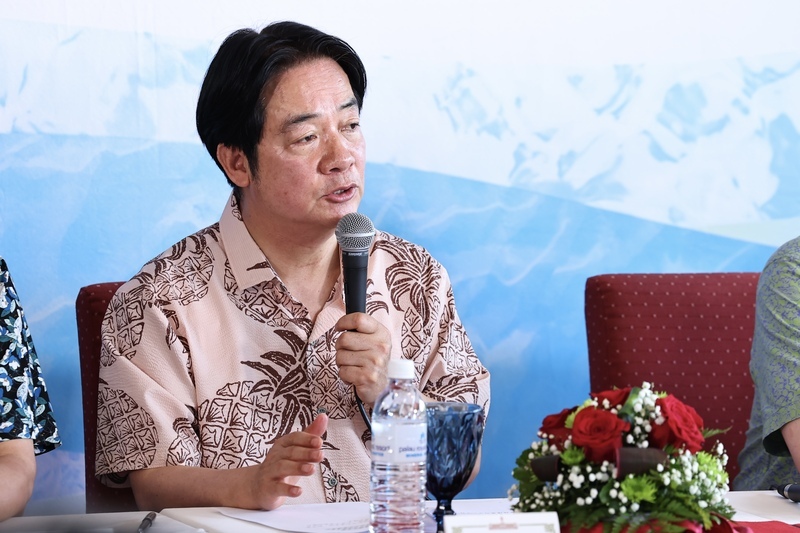
President Lai Ching-te (賴清德) held a meeting Friday during his visit to Palau to field questions regarding the DPP social media post, among other concerns. The president appealed to the public and government officials to remember Taiwan’s history, and that its democracy is hard-won. Lai stated that even though Taiwan is a small country, it stands at the front line in the face of authoritarian expansionism, against which the greatest strength is unity. He emphasized that the Taiwanese people must continue to stand together and present a united front supporting a democratic and free way of life.