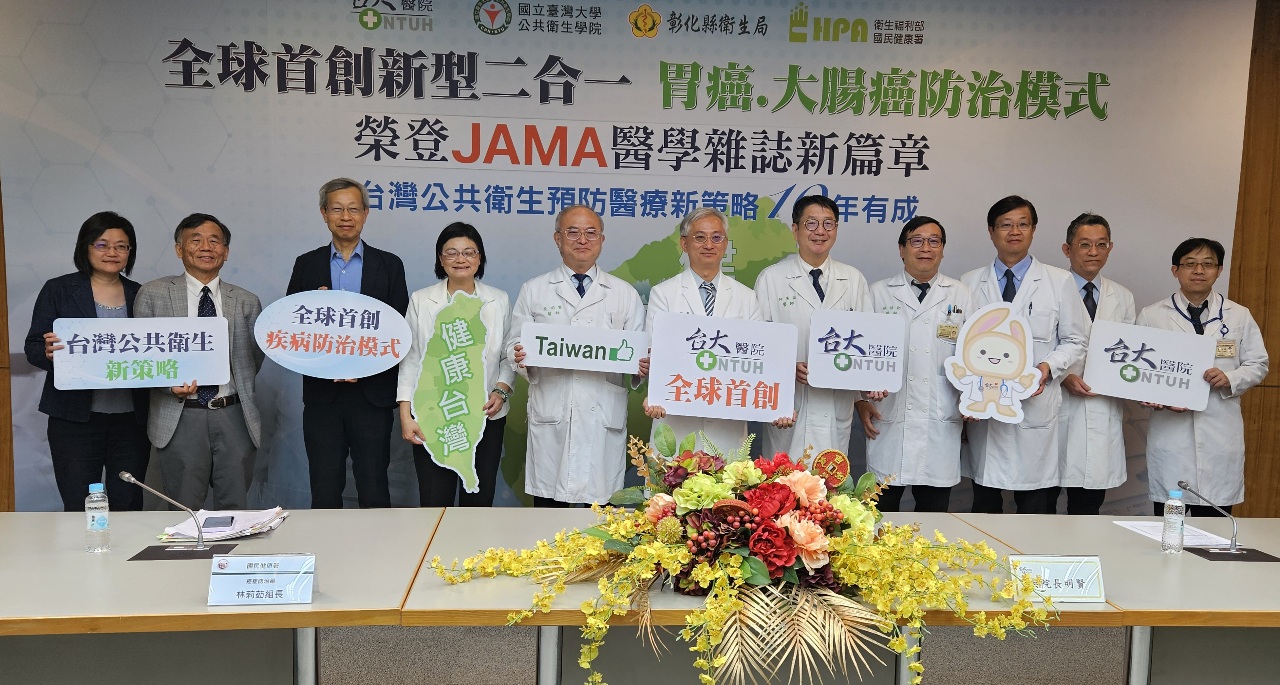
Taiwan has introduced the world's first two-in-one colorectal and stomach cancer screening. National Taiwan University (NTU) announced the breakthrough dual screening system on Wednesday.
Taiwan sees 20,000 new cases of stomach and colorectal cancer each year, with 8,000 people dying from these two diseases. While colorectal cancer screening in Taiwan has traditionally relied on fecal occult blood tests, stomach cancer detection methods have been less effective. It is currently known that 90% of stomach cancers are caused by the Helicobacter pylori (H. pylori) bacterium.
NTU began collaborating with the Changhua County Public Health Bureau in 2012 to develop a dual screening method that integrates H. pylori fecal antigen tests into the conventional colorectal cancer screening process. In a decade-long trial involving 150,000 participants, the new system led to a 14% increase in participation, a 21% drop in stomach cancer cases, and a 28% reduction in colorectal cancer mortality.
The Health Promotion Administration has already begun piloting the program for those aged 50 to 74 in nine counties and cities this year, with plans to expand and adjust screening eligibility next year.