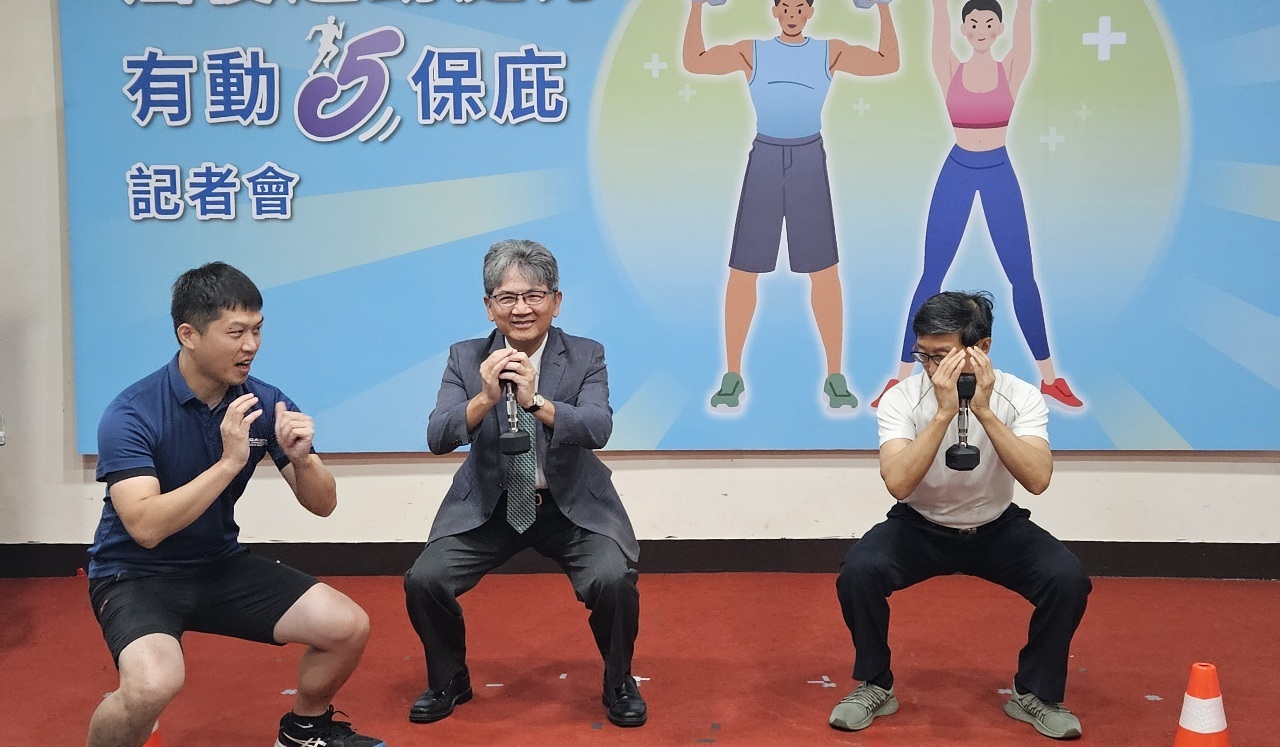
Following two years of preliminary testing, the Hope Foundation for Cancer Care announced it will officially endorse a cancer treatment plan incorporating physical training on Thursday. The foundation believes this approach will significantly aid in patients’ recovery and improve their quality of life.
In line with global trends, the foundation has engaged National Strength and Conditioning Association certified personal trainer Chasel Lin (林冠廷) to develop and implement a sports-integrated cancer treatment plan since 2022.
The treatment plan is the result of collaboration among a diverse team of doctors, physical therapists, and trainers. It spans three months and includes 12 sessions focused on various muscle groups and their responsiveness. This training aims to enhance muscle strength, endurance, agility, balance, and cardiorespiratory fitness.
The foundation’s honorary director and oncologist Hsieh Cheng-i (謝政毅) noted that while walking is a common form of exercise among cancer patients, it may not be the most effective treatment. He emphasized that many cancer-related issues arise from chemotherapy side effects, and numerous studies have shown that regular exercise can alleviate long-term side effects such as fatigue, lymphedema, poor sleep quality, and depression.
Legislator Wang Cheng-hsu (王正旭) emphasized that post-treatment exercise and ongoing monitoring should be given equal importance. He expressed hope that the government will consider incorporating this approach into its policies to help achieve President Lai Ching-te’s (賴清德) goal of reducing cancer deaths by one-third by 2030.
According to the Health Ministry, over 121,000 people are newly diagnosed with cancer each year, and the survival rate has steadily increased over the past five years, now reaching 62%.
Since 2022, the foundation has trained 18 professional trainers in this specialized field and plans to expand its training programs to additional cities and counties across Taiwan. Additionally, it has also conducted 20 physical training sessions for 175 cancer patients. Results indicate that over 85% of these patients have continued exercising post-treatment, showing improvements in their physical condition and overall quality of life.