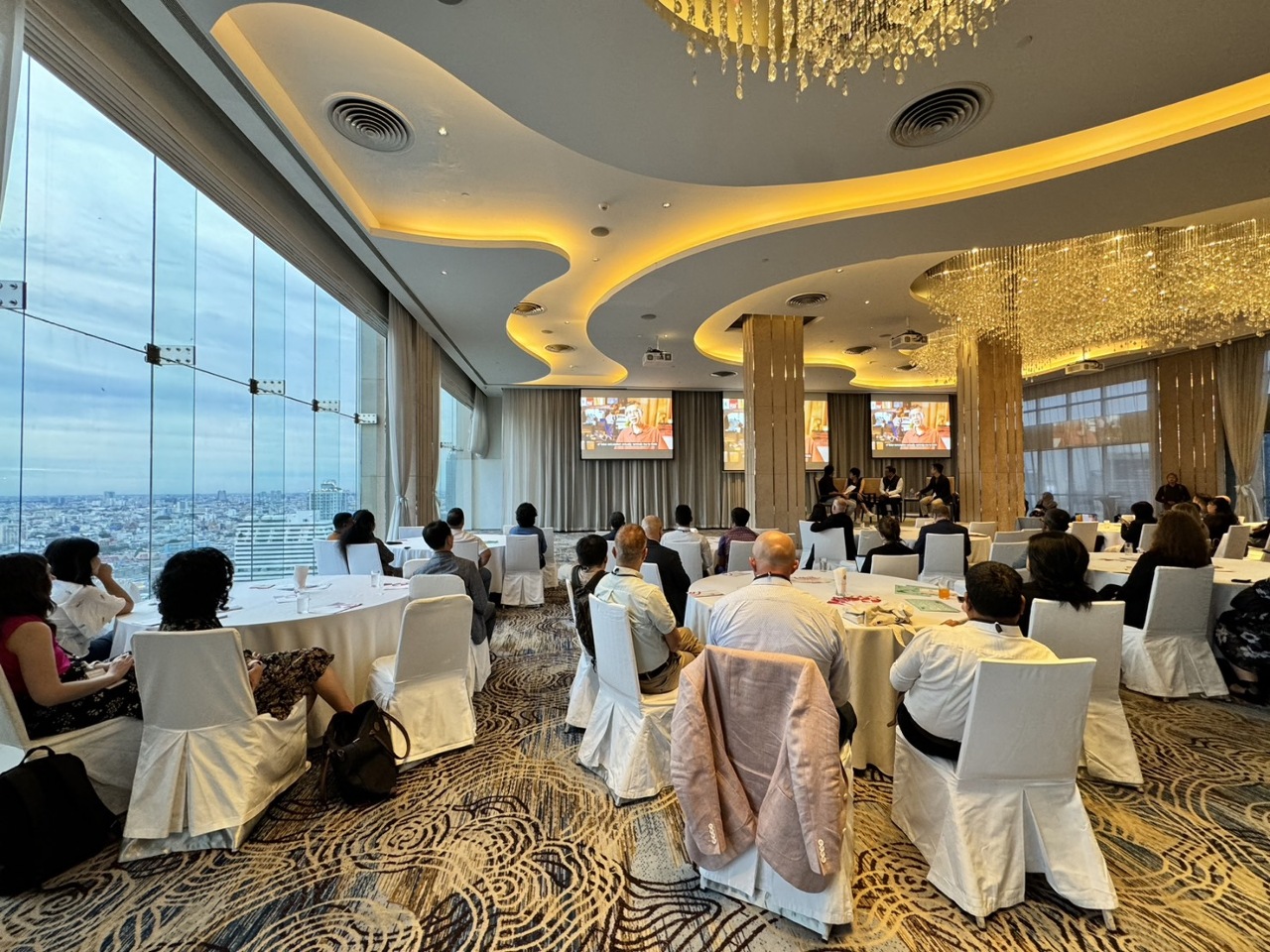
Radio Taiwan International was invited to participate in the 9th “Shrinking Civic Space in Asia: Stories of Resistance and Pushback” seminar in Bangkok, Thailand on Wednesday evening. At the opening ceremony, Rti hosted a forum themed “Beyond Borders and Ethnicities: Stand with Democracy.”
Rti Vice President Isis Lee Ming-li (李明俐), Ukrainian host Oleksandr Woosung Shyn, and Observer Research Foundation in India senior researcher Niranjan Sahoo led the panel discussion. They highlighted regional political situations and challenges facing global civil society.
Vice President Lee discussed how public media can improve media accessibility for new residents and migrant workers through multilingual communication. She also highlighted the challenges Taiwan and Ukraine face due to similar geopolitical factors and shared ways to address them. Regarding the Rti Academy established this year, Lee said it plays a key role in geopolitics and international integration, promoting free speech throughout Asia and enhancing the influence of Taiwan in the international community.
Shyn elaborated on the geopolitical parallels between Ukraine and Taiwan based on his own experiences. He said that Ukraine deals with Russian propaganda in much the same way as Taiwan is impacted by cognitive warfare from China. He noted that since the Russo-Ukrainian War escalated in 2022, Taiwan and Ukraine’s respective national identities have attracted increased attention from the global community. Shyn also mentioned Taiwan’s language policy and efforts toward language revitalization, emphasizing how such measures reflect the importance of multiculturalism.
Sahoo spoke on the Indian election results in 2024, which exposed numerous problems with Indian authorities and misinformation campaigns. He went on to describe the implications for democratic societies around the world and explained the impact of diversity and tolerance.
Hong Kong visual artist and educator Kacey Wong (黃國才) also appeared on video, calling on the International Democracy Union to fight the expansion of totalitarianism. Since the Thai government has previously arrested Hong Kong journalists and dissidents, Wong’s choice to appear in a recorded video rather than in person demonstrates the growing cross-border repression faced by Hong Kong activists and highlights his resistance to the restrictions imposed on Asian citizens.
Wong had been an active participant in Hong Kong’s protest movements, but chose to leave the city and settle in Taiwan where he is free to use art as a tool of resistance without facing political suppression. In his video, he stressed the need for alliances among small countries in the face of a larger power.