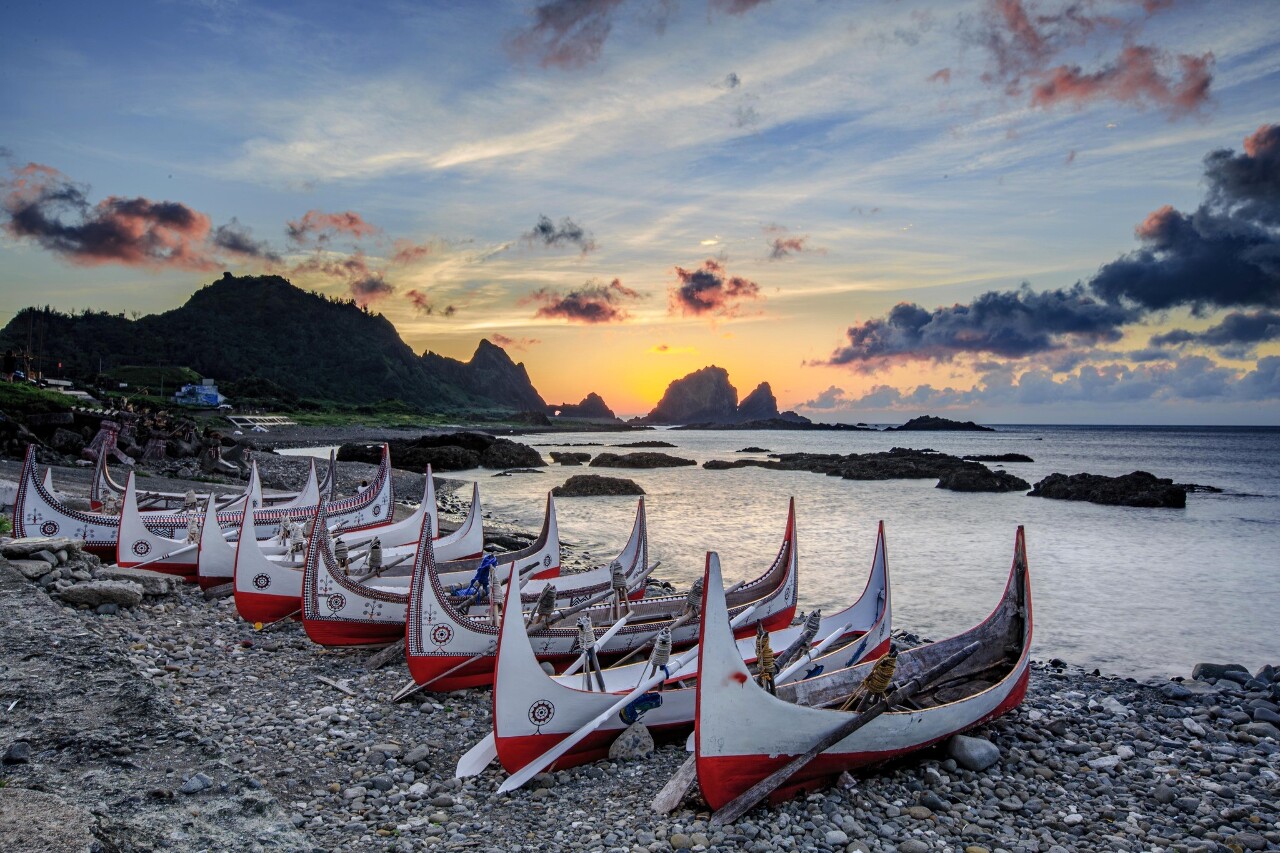
The Tao (Yami) peoples of Lanyu or Orchid Island, also called Pongso no Tao in the native language, in Taiwan embarked on a ritual canoe launching ceremony. The special occasion was held in the Dongqing Bay from July 10th through the 12th.
The celebration drew together members of the community from all parts of the island, many of whom appeared in traditional dress. It was conducted to inaugurate new canoes and receive blessings from ancestors, who once may have traveled by canoe across the Bashi Channel from what is now the northern Philippines.
For generations, Tao peoples have produced exquisitely carved large (cinedkalan) and small (tatala) canoes for voyages, transportation, fishing, trade and other practical purposes. The hand-hewn boats are made up of individual wooden planks carefully fitted together and share similarities with canoes in other areas of the Pacific. They vary in size and detail and require months of work to complete.
On some of them, there are striking depictions of their ancestral hero Magamaog, who passed down the traditional skills of boat building and agriculture essential to Tao existence. There are also large concentric circles at the prow and stern, representing the eyes of the vessel, surrounded by small triangles painted in colors of red, white and black. These different design motifs and styles have made the canoe an iconic marker of the Tao people’s reverence for the ocean.
Today, Tao canoes are not only used for fishing, but also as tools for political activism and marketing; as objects of artwork and collection; as artifacts of documentation, research and design; and, as key items in the tourist economy. Such reinterpretations raise questions about the commodification and appropriation of traditional practices and knowledge. Growing awareness for the distinctive canoes, however, has also increasingly transformed them into a powerful expression of Indigenous identity and the rich cultural heritage of the Tao peoples.