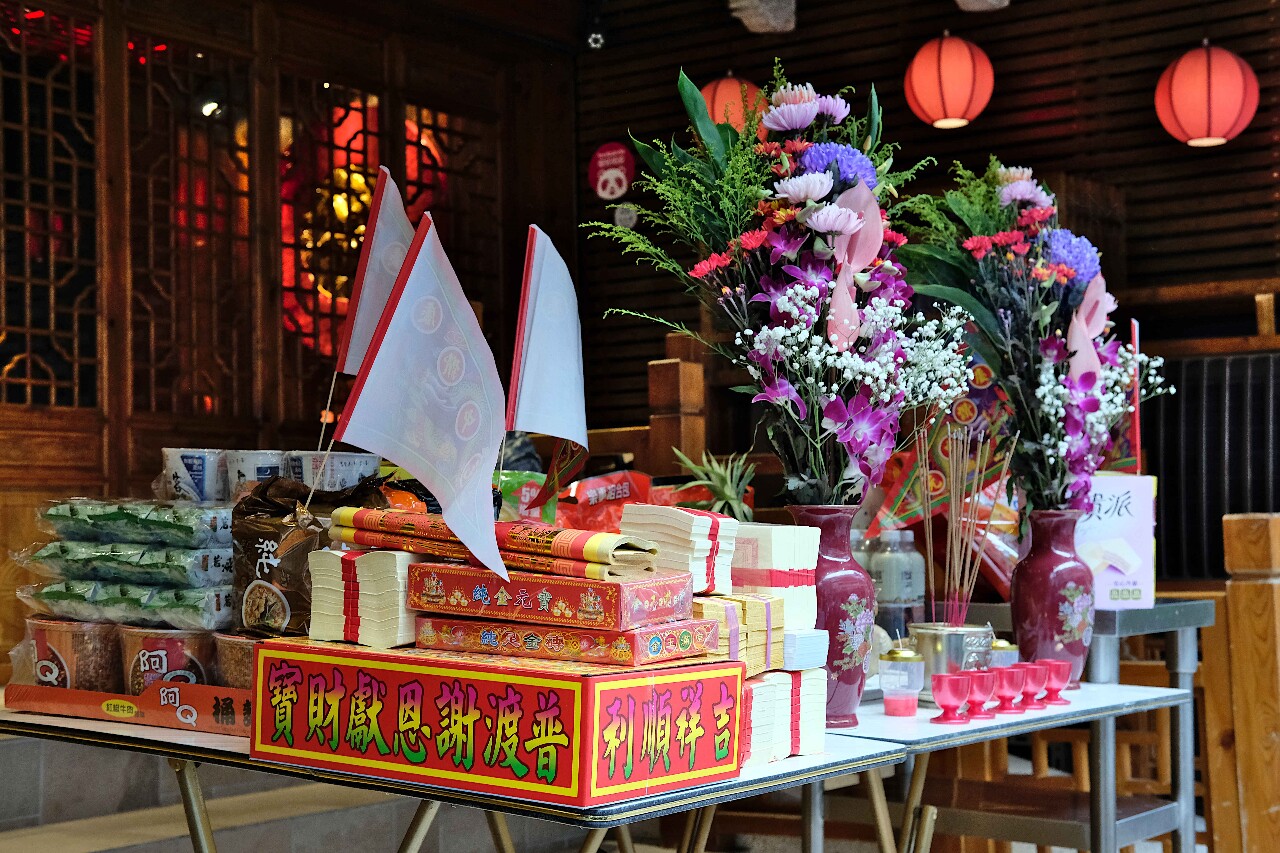
Wednesday, August 30, is the fifteenth day of the seventh month in the lunar calendar. Called by various terms but popularly referred to as the Ghost Festival, the purpose of this annual rite of universal salvation is to remember departed ancestors and appease troublesome ghosts in the hopes of averting evil, ensuring peace, and obtaining luck.
Commonly observed by Buddhists, Taoists, and followers of the nameless folk religion, the ceremony generally begins during the day with the presentation of ritualistic offerings on a table in front of the doorway outside homes and businesses. Incense sticks are then kindled by a manager of the company or the head of the household to initiate communication with the invisible spiritual realm, prayers are whispered, and the ghostly underworld is invited to partake of the feast.
When the incense has burned down, additional sacrifices in the form of burning paper money as well as paper images of useful objects such as clothes are made in the street to bribe away demonic forces. At the end of the ritual, a person bows in obeisance to the spirits of the dead, pours the drinks out over the glowing embers of fire, and the leftover plates and packages of food and bottled drinks are taken indoors for family, friends, and colleagues to consume.
Of course, in an era of scientific and technological advancement, some of the rites performed may at times seem quite at odds with what modernity is all about. In reality, however, it should probably come as no surprise that a ritual with deep historical roots can still be found in Taiwan today.