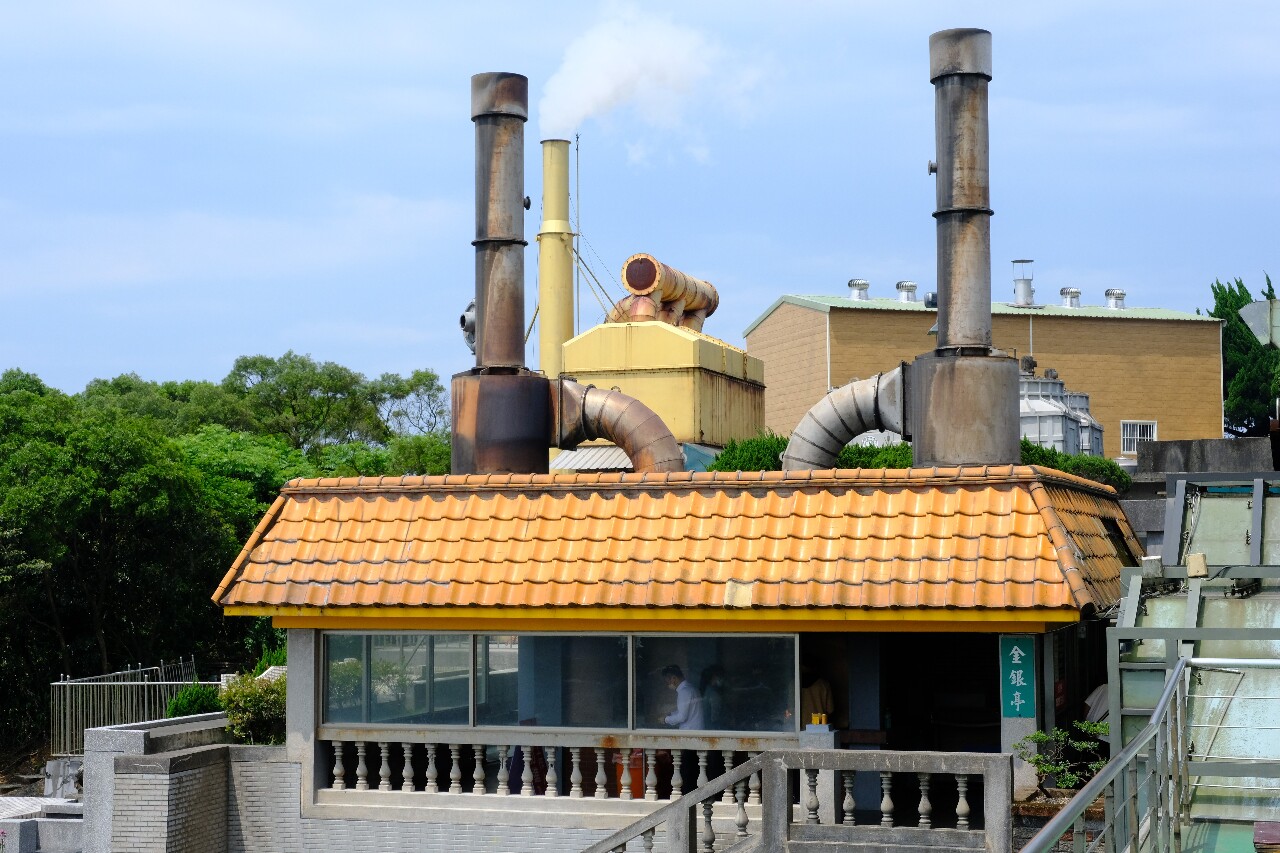
In Taiwan, worshippers of popular religion collectively burn approximately 200,000 to 250,000 tonnes of spirit money per year. The long and slow combustion process releases large amounts of particulate matter, metals, and gaseous pollutants into the atmosphere annually, especially during such holidays as Ghost Month in August, Chinese New Year around late January, and Tomb Sweeping festival in April.
Technologies used to perform the ritual, and thus communicate with deities and deceased ancestors, vary widely depending on the occasion, the predilection of the worshiper, the scale, area, and place of the temple, and so on. Among these methods, the most common approach and also largest source of hazardous emissions is igniting spirit money in open braziers or aluminum containers. By contrast, large-scale incinerators that have been equipped with air pollution control devices can be quite efficient in minimizing the impact of ritual burning on the environment.
However, while scrubbers and precipitators are the more environmentally sustainable alternative to traditional burning methods, such devices are not without drawbacks and costs. Indeed, even the so-called “best available technology” does not have to reduce emissions to reach a certain threshold and the discharge can still pose a risk to public health. This places a spotlight on the need for more limits and coordination as Taiwan strives to reach a common goal of net zero emissions by 2050.