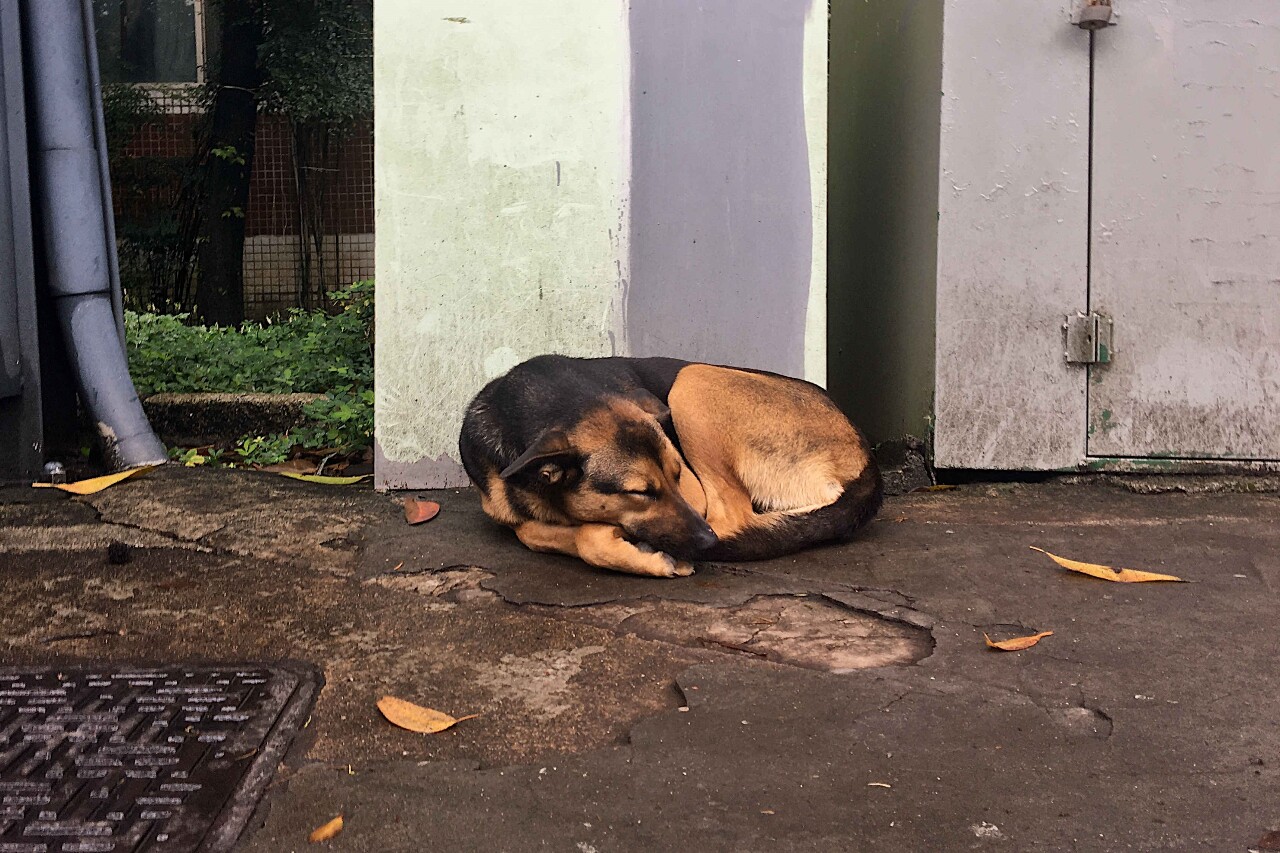
In Taiwan, homeless animals can be found in parks and along the rivers in Taipei, in residential areas and patches of natural environment, and in the back regions of cities. With a total population of around 500,000, the number of stray cats and dogs is about one fifth that of registered dogs and cats kept for companionship.
Several factors account for the large population of street animals. In numerous cases, the animals were owned as house pets and have been abandoned or lost by their family or the people who were entrusted to care for them. Other animals were unowned and have been roaming free for two or three generations.
Street animals live under different conditions. The lucky ones are considered safe and well-mannered, and are fed and taken care of by the animal lovers amongst residents in the area. Others, however, are seen as a transgression of space and obviously neglected. Even if they do not constitute a menace to the public, their lives run the risk of abuse and other dangers.
Some of these animals may be captured and placed in public animal shelters in cities and counties. However, there are many more animals than shelters have space for. In addition, the number of animals greatly exceeds the human and financial resources of the shelter to take care of them, resulting in overcrowding, poor conditions, limited veterinary services, and other shortages.
Unfortunately, there are no easy solutions to eliminate these problems. However, there may be some ways to respond to the challenges.
Interventions include raising the public’s awareness of animal welfare through the media and other campaigns, preparing new owners for the commitments of pet keeping, curbing intensive breeding and puppy mills, increasing the number of quality shelter facilities, and mobilizing resources for rescue groups and shelters that maintain high standards of management.
In addition, it is important to manage pet overpopulation with expanded sterilization and vaccination programs reaching high coverage. Over time, practices of this kind can help to reduce the number of unwanted animals and improve the situation for strays.