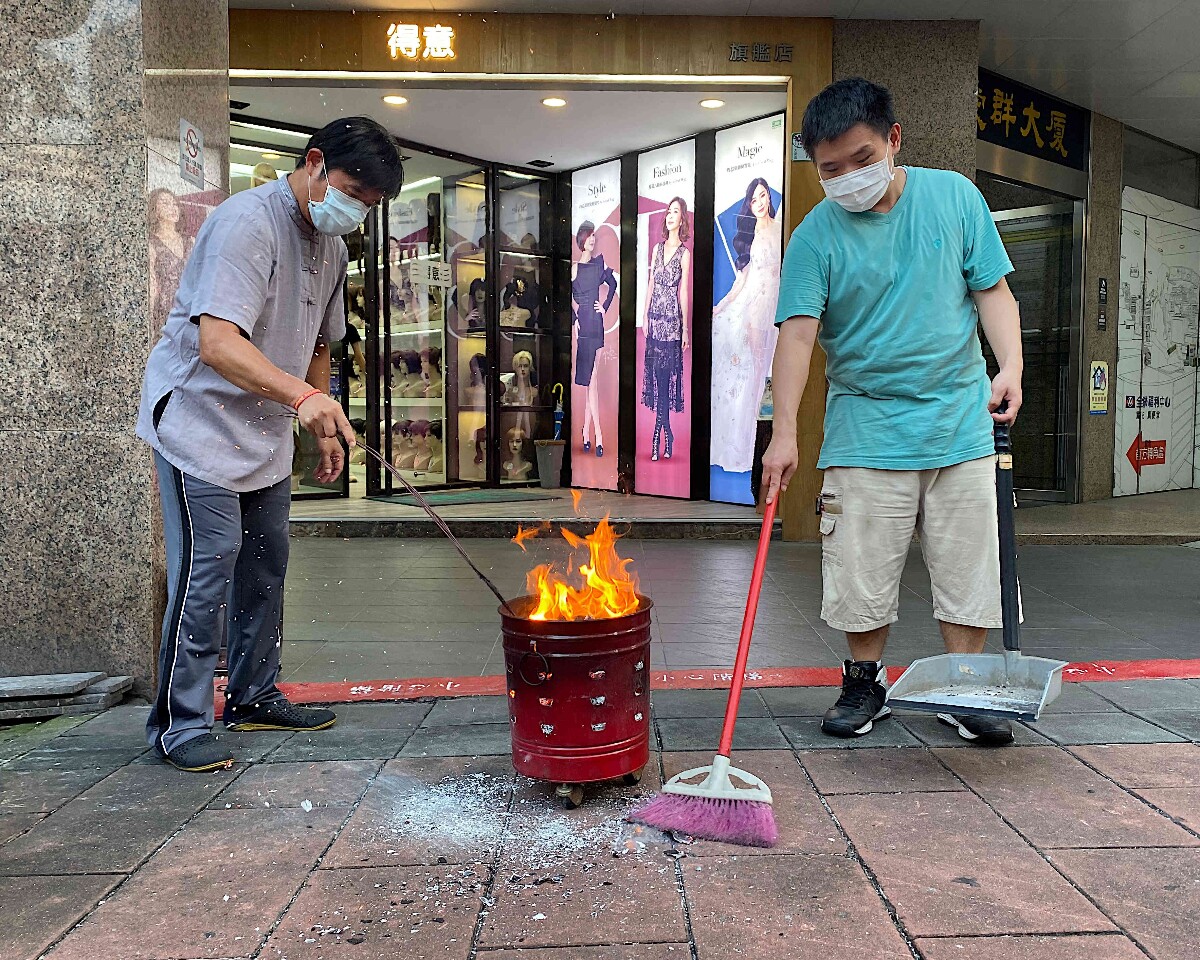
On any given morning or afternoon in Taiwan, it is likely that there are some people making offerings of spirit money into a metal brazier set up in the street or near the curb outside homes, apartment buildings, and businesses. The burning ordinarily generates large quantities of bottom ash, a heavier, incombustible by-product that settles in the furnace and must be removed.
The rough residue is grayish black in color and can have a different chemical make-up depending on the kinds of paper burned. Broadly speaking, it has been found to contain high concentrations of heavy metals and toxic organic chemicals, which can pollute the environment and impair human health.
When the ritual is finished, the smoldering flames of the spirit money are doused in some water and left to cool for a period of time. The heap of ash is then commonly dumped into the trash or discharged in sewage, turning the water black and making drainage difficult. The practice can lead to sludge running untreated into rivers and cause water and soil contamination.
In Taiwan, there are no rules to govern the disposal of ash. There is also insufficient measurement of its effect on water, soil, and land. However, paying attention to the risks that could arise can provide a basis for establishing proper guidelines and developing more effective monitoring of indiscriminate waste.