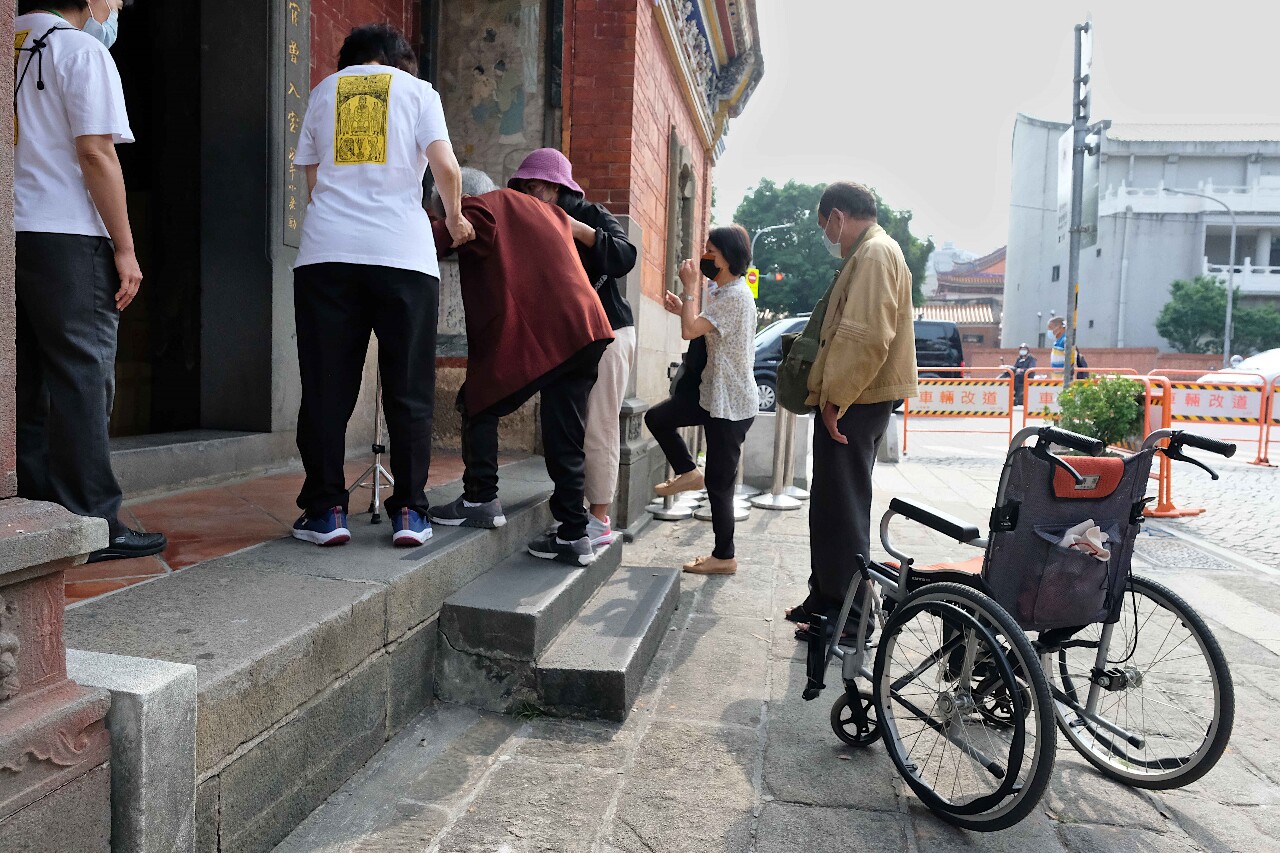
Traditional Taiwanese temples are entered via a clearly demarcated threshold. This threshold is marked by a door sill that often projects up quite high, and it can be difficult to cross over, particularly, for people with mobility or other types of impairment.
Although this threshold traditionally had a spiritual and practical role, it also retains the potential for reflection on whether folk temples and other religious sites in Taiwan include easy accessibility features for certain groups of people.
This means not only accessibility of cultural heritage for visitors with communication limitations through a diversity of languages, for example, but also easy physical access to the space for persons with disabilities, including enabling environments for senior citizens and wheelchair users.
With Taiwan soon to become a super-aged society in which people aged 65 and over will account for at least 20 percent of the population, the existing infrastructure, particularly the type of built features already in place and its suitability for differently abled groups, reveals barriers to inclusion that still need to be addressed.